

Science
Executive Curriculum Summary Science
At Gorsefield, our science curriculum is designed to inspire curiosity, encourage exploration, challenge all pupils and develop a secure understanding of the world through scientific enquiry. Pupils are supported in developing an understanding of the nature, processes and methods of science through a range of enquiry types that enable them to investigate and answer scientific questions about the world around them.
Below is the programme of study for science that outlines the domains our children learn from Year 1 – 6. These domains are strategically placed within the science curriculum to ensure that knowledge and skills are built on sequentially. ‘Working scientifically’ is not taught as a separate strand but incorporated into every lesson to ensure that our children are developing and applying their disciplinary skills as well as securing their substantive knowledge.
Programme of Study
|
Year 1 |
Year 2 |
Year 3 |
Year 4 |
Year 5 |
Year 6 |
|
Animals including humans Seasons Materials Electricity Plants |
Animals including humans Materials Light Plants Forces |
Animals including humans Rocks Light Plants Forces |
Animals including humans States of matter Sound The water cycle |
Animals including humans Plants Materials Earth and Space Forces Electricity |
Animals including humans Evolution Light Electricity |
|
Working Scientifically |
|||||
Enquiry Types
|
Scientific Enquiry |
Description |
|
Identifying, grouping and classifying |
Children begin identifying, grouping and classifying objects in the world around them from a very young age; this type of enquiry comes very naturally as young learners try to make sense of the world around them. In this type of enquiry, children make observations and measurements to help them look for similarities and differences. This will help them to organise things into groups and make connections.
|
|
Pattern seeking |
Pattern-seeking enquiries involve children taking measurements or observations to explore situations where there are variables that they can’t easily control. In these enquiries, children are trying to answer questions by identifying patterns in the measurements and observations they record.
|
|
Observing over time |
Observing over time enquiries lend themselves to observing the natural world but can also be used when comparing materials and observing physical processes, such as melting.
|
|
Comparative and fair testing |
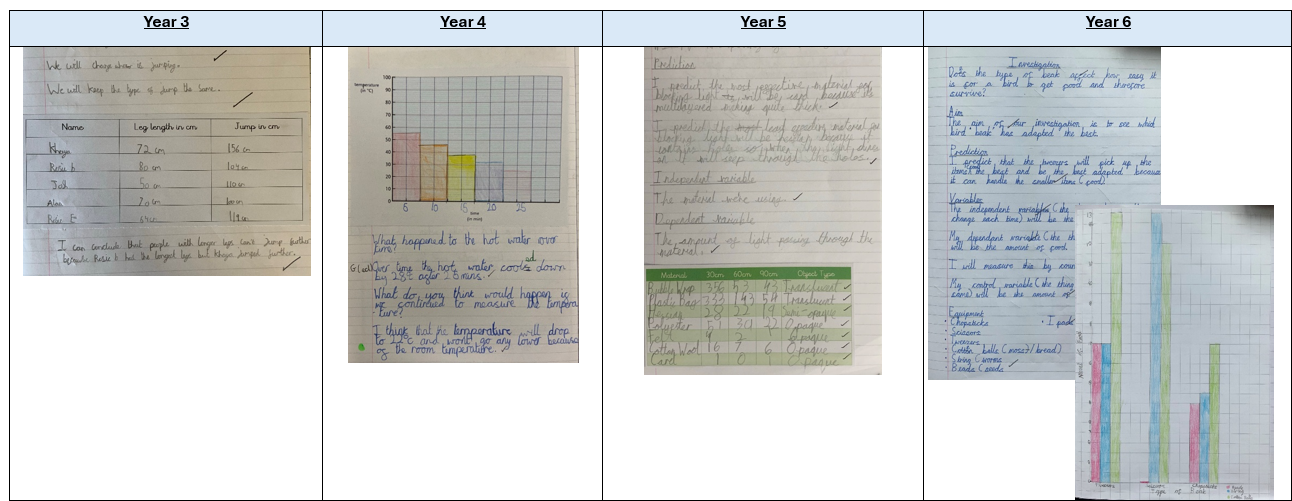
Fair test enquiries are an opportunity for children to explore cause and effect relationships in science. Children find the answers in these enquiries by planning tests to collect data through changing, measuring and controlling variables. Fair tests involve making systematic changes and analysing data to identify how one variable influences another.
Enquiries that are comparative tests have many similar features to fair tests in that one variable is changed, another variable is measured, and any other variables are controlled. The difference is that in a comparative test the variable that is changed is discrete rather than continuous, so children are comparing different cases/situations.
|
|
Research using secondary sources |
In research enquiries children use a range of secondary sources to help them find out more. Children may read texts, watch videos, study images or interpret data. Research enquiries provide children with opportunities to compare and evaluate information from different sources. Children learn to recognise the differences between fact and opinion, considering the concept of bias and how people’s understanding of the world has changed over time. |
Science in the Early Years Foundation Stage
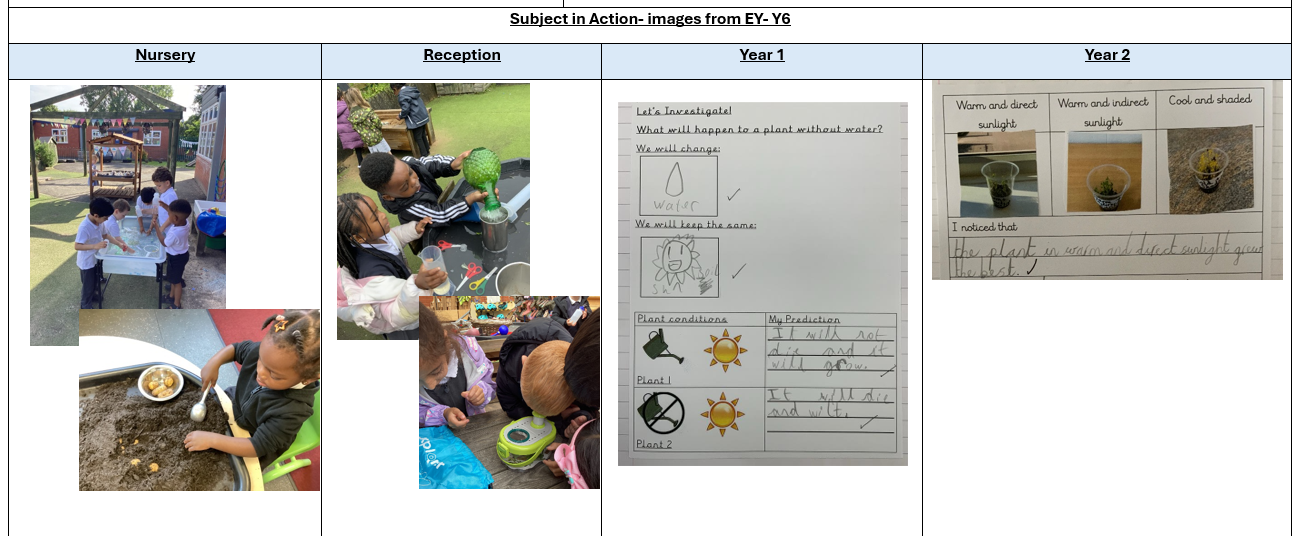
In the Early Years Foundation Stage (EYFS), the foundations of science are developed primarily through the area of learning known as Understanding the World. This area helps children begin to make sense of their surroundings and the natural environment. Children engage in play-based, hands-on experiences that encourage curiosity, exploration and early scientific thinking.
From the beginning of their learning journey, children use their senses to explore materials, objects and natural phenomena. They are encouraged to observe carefully, notice similarities and differences and experiment with how things behave. Through these activities, they begin to develop early scientific language and concepts such as change, growth, movement and cause and effect.
They learn about life cycles, seasonal changes, plant growth, and the needs of living things through practical activities. These experiences help them build early biological knowledge while encouraging responsibility and respect for the natural world. They also explore materials and forces, learning how different materials behave and how objects float and sink.
Throughout EYFS, the Characteristics of Effective Learning, playing and exploring, active learning and critical thinking, support all scientific experiences. These approaches encourage questioning, investigation and problem-solving. By the end of the EYFS, children have developed a strong foundation in curiosity, observation, and enquiry- essential skills that prepare them for more formal science learning in Key Stage 1 and beyond.
Partnerships
Our school has been working in partnership with the Ogden Trust and Manchester University’s Faculty of Science and Engineering for the last three years to ensure that our science curriculum and enrichment opportunities are up-to-date, ambitious and inspire our children to be the next generation’s scientists.
The Ogden Trust
Established by Sir Peter Ogden in 1999, The Ogden Trust is a charitable trust that promotes the teaching and learning of physics. Their vision is for every young person to have access to a high-quality physics education. To achieve this vision, they support teachers and improve systems across schools and colleges in England, particularly those in areas with the greatest socio-economic challenges. Being a part of the Ogden Trust enables us to enhance our lessons with high-quality resources, provide staff with bespoke professional development in physics and deliver science enrichment opportunities throughout the year.
The University of Manchester
Based in The University of Manchester’s Faculty of Science and Engineering, SEERIH positively influences the experience and learning outcomes of teachers and young people in science and engineering. Their programmes provide teachers with innovative, research-led teaching and learning practice. Professional development provided by SEERIH has supported us to design an aspirational curriculum that teaches children the key knowledge and skills that they need to be successful scientists.
Learning and Teaching Newsletters
To further support your child's learning at home and strengthen the connection between school and home, we encourage families to regularly visit our Learning and Teaching Newsletter section. The newsletters are directly linked to the curriculum and provide valuable information about current learning, key knowledge and skills, retrieval and retention activities, practical ways to reinforce learning at home and events in the local area directly linked to the Learning without Limits curriculum content. They also showcase hands-on experiences, enrichment opportunities, and enhancements that bring the curriculum to life for our pupils. Please visit the Learning and Teaching Newsletter section here: https://www.gorsefieldprimary.school/News/Newsletters/
Curriculum Impact Statements
Our curriculum impact statements celebrate the success of our children, showcasing how our rich and inspiring curriculum empowers them to thrive, achieve their full potential, and develop learners who excel at Gorsefield. They reflect the meaningful progress our children make and our commitment to continuous growth and excellence. We use the Curriculum Impact Statements to feed into the school development plan and ensure that our teaching continually evolves to meet the needs of all learners, driving high standards, equity, and a passion for learning, within science, across the school.
Sustainability Lead
Gorsefield Primary School's Sustainability Leads are Mrs Onyekaba and Mr Whittaker
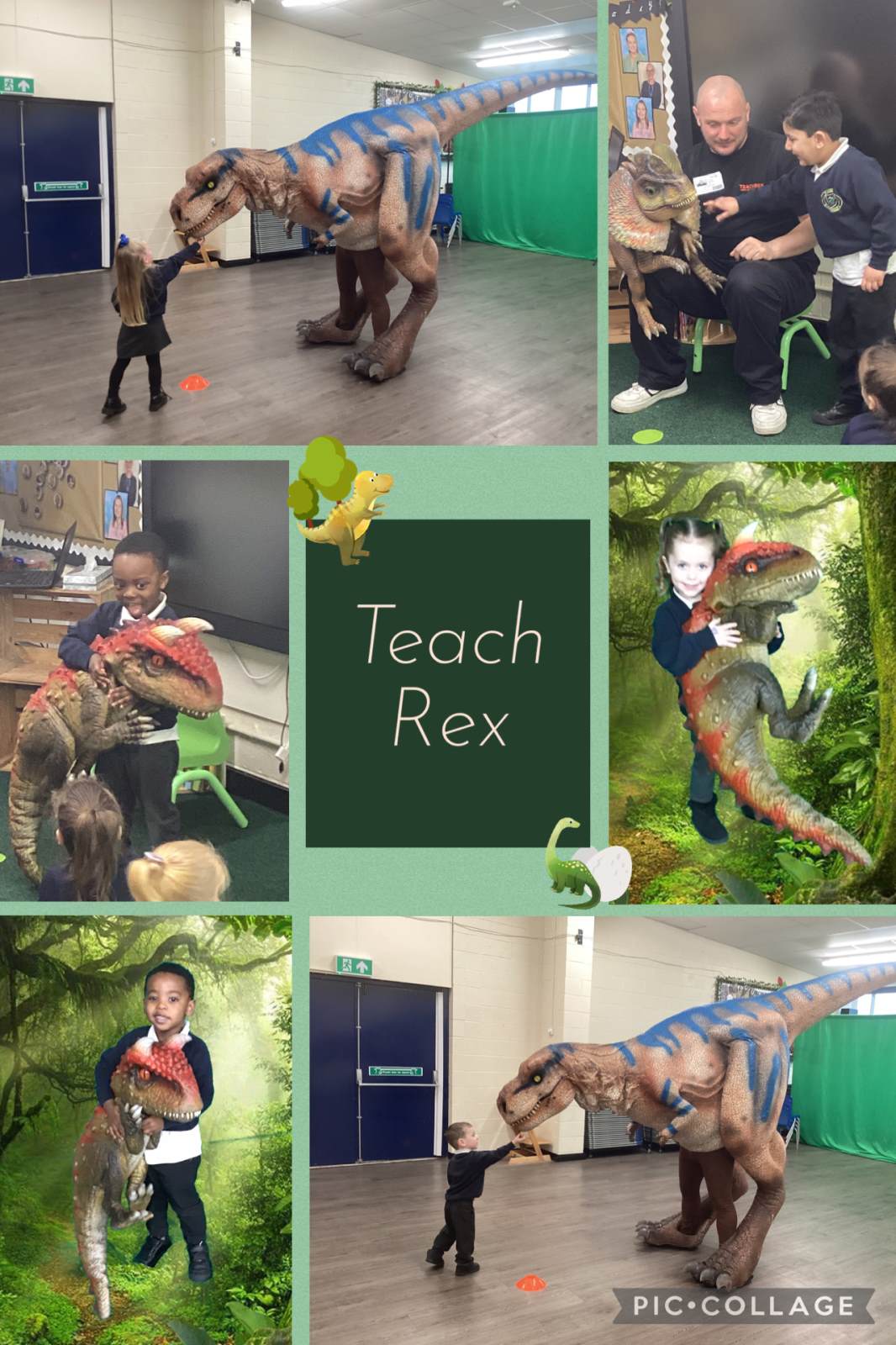
A visit from Teach Rex helped our Early Years children develop their curiosity, questioning and scientific vocabulary!
Powered by Physics! Our Gorsefield scientists proudly represented the school at the Trust Physics Olympics, applying their understanding of forces, energy, and motion to solve exciting, hands-on STEM challenges!
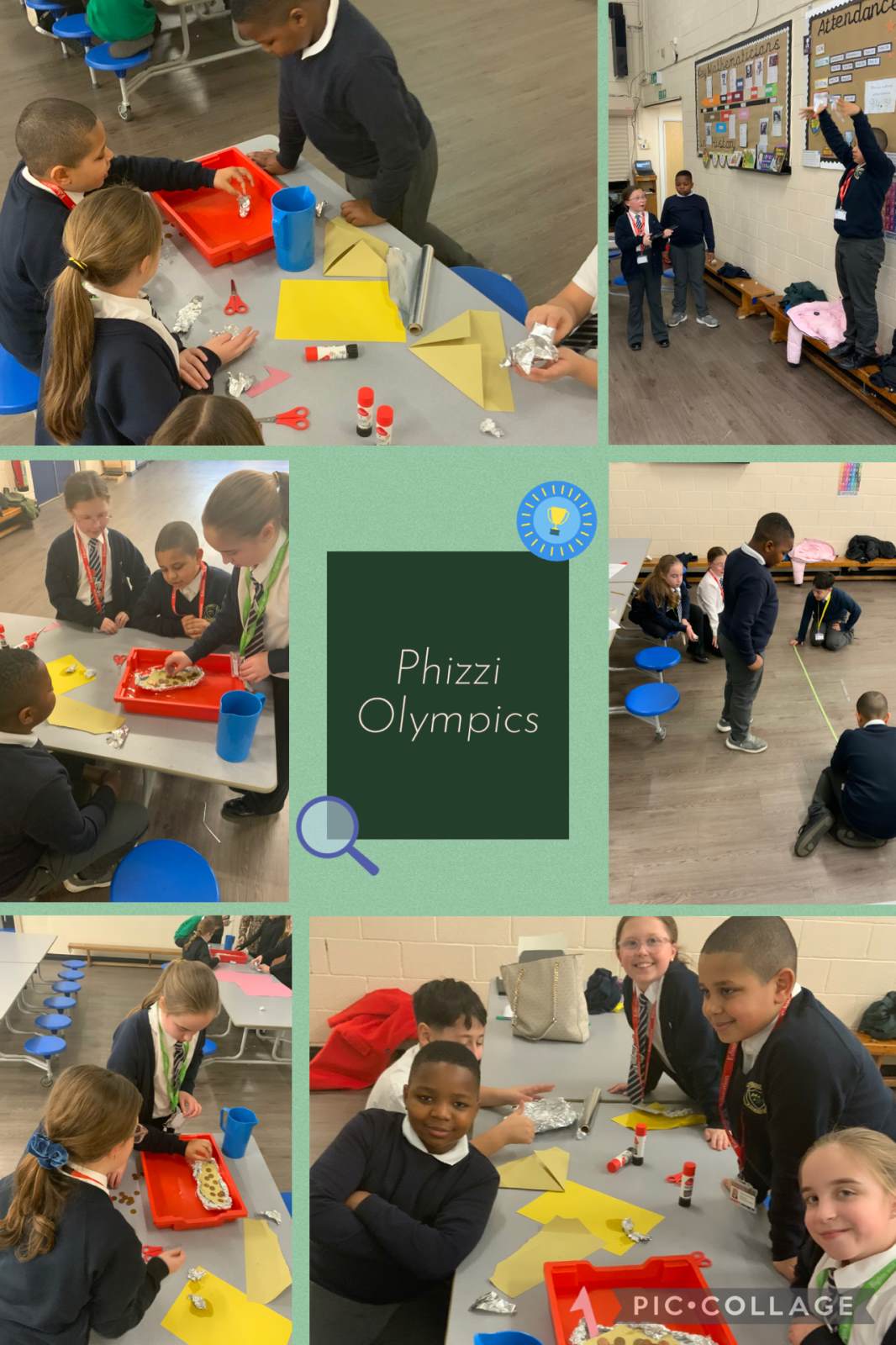
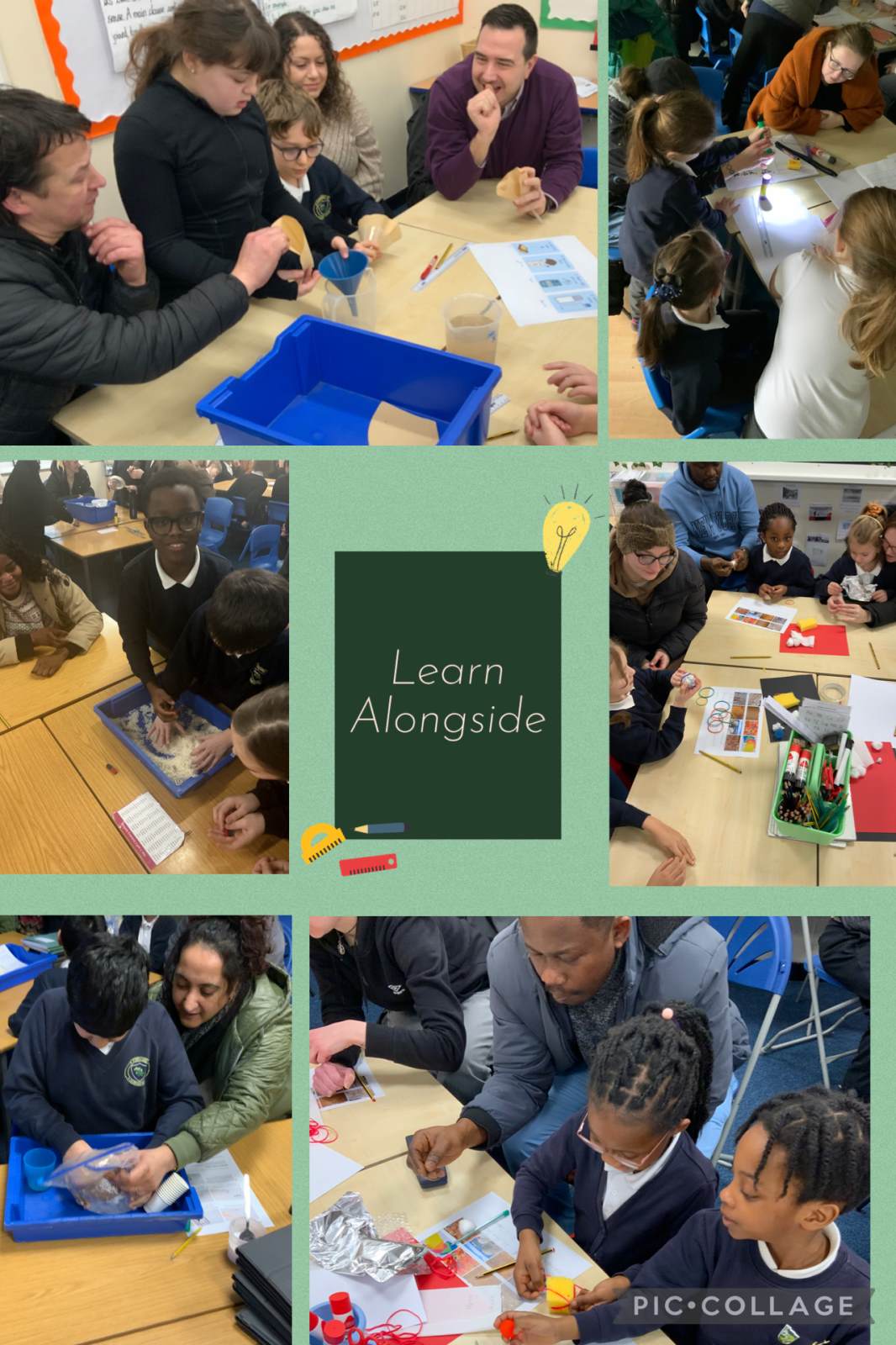
STEM Snapshots
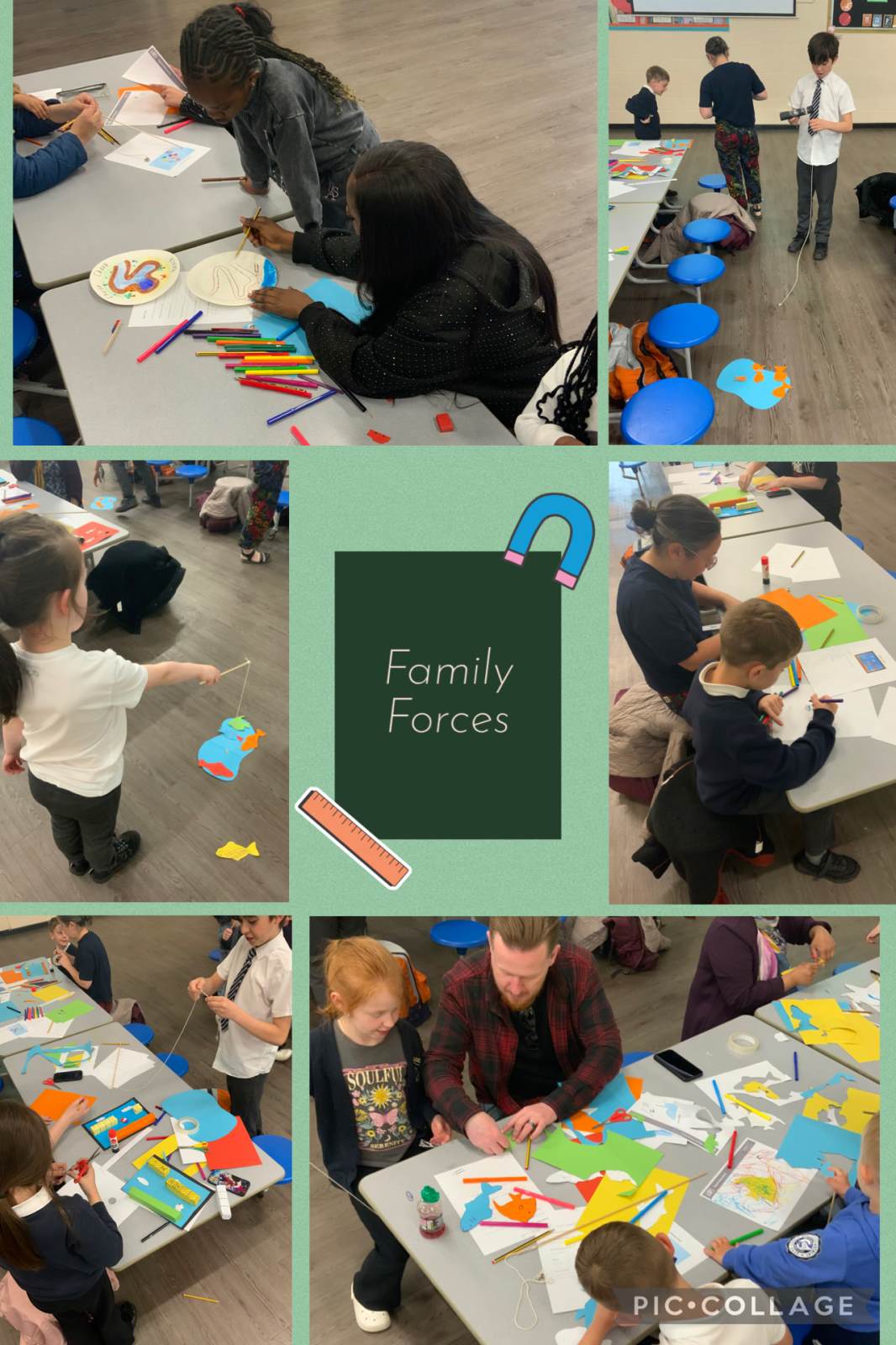
Family Forces: during our Family Forces Event, children and families investigated how magnets attract, repel, and move objects!
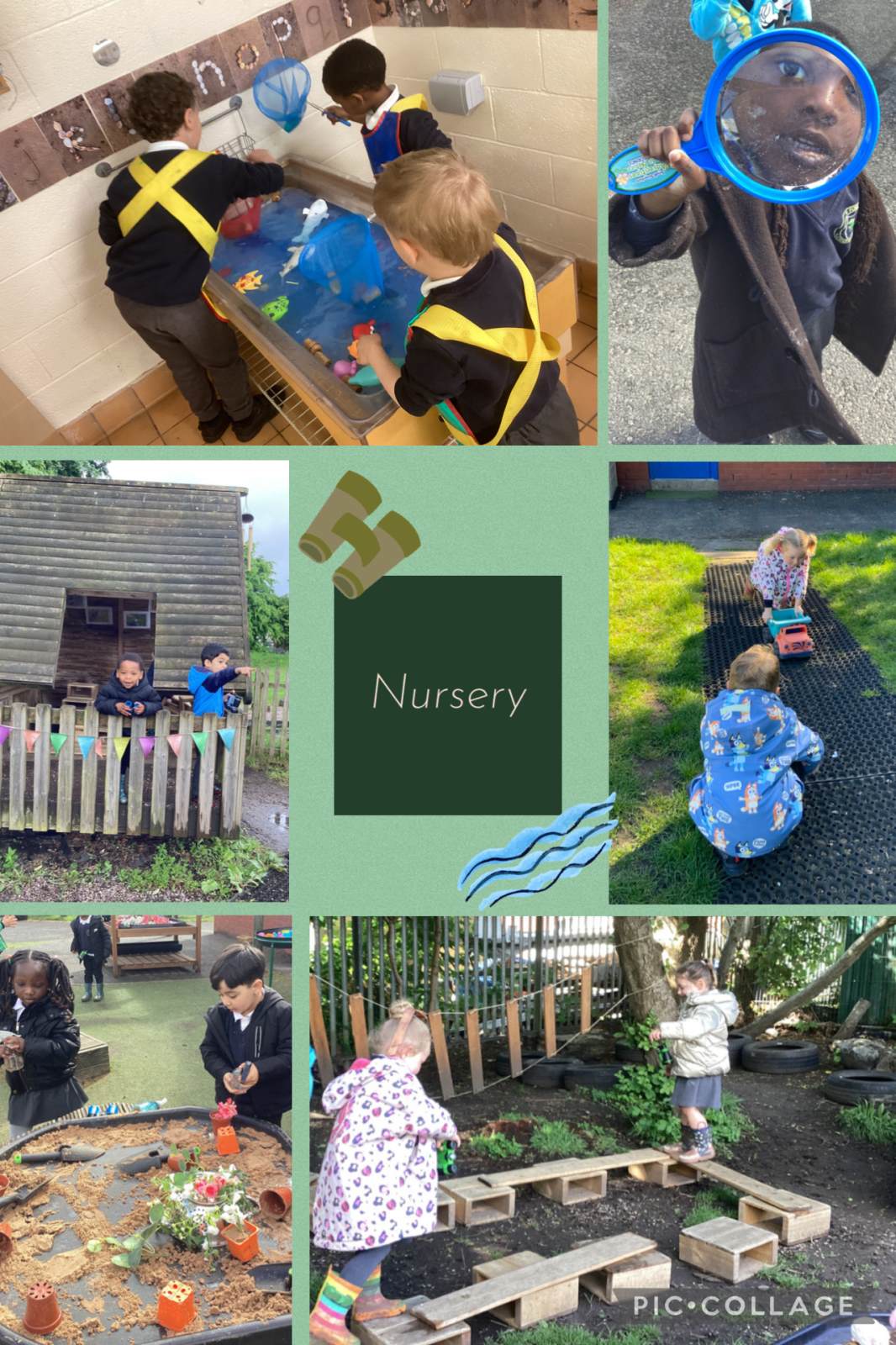
Even our youngest scientists are busy investigating the world around them every day!
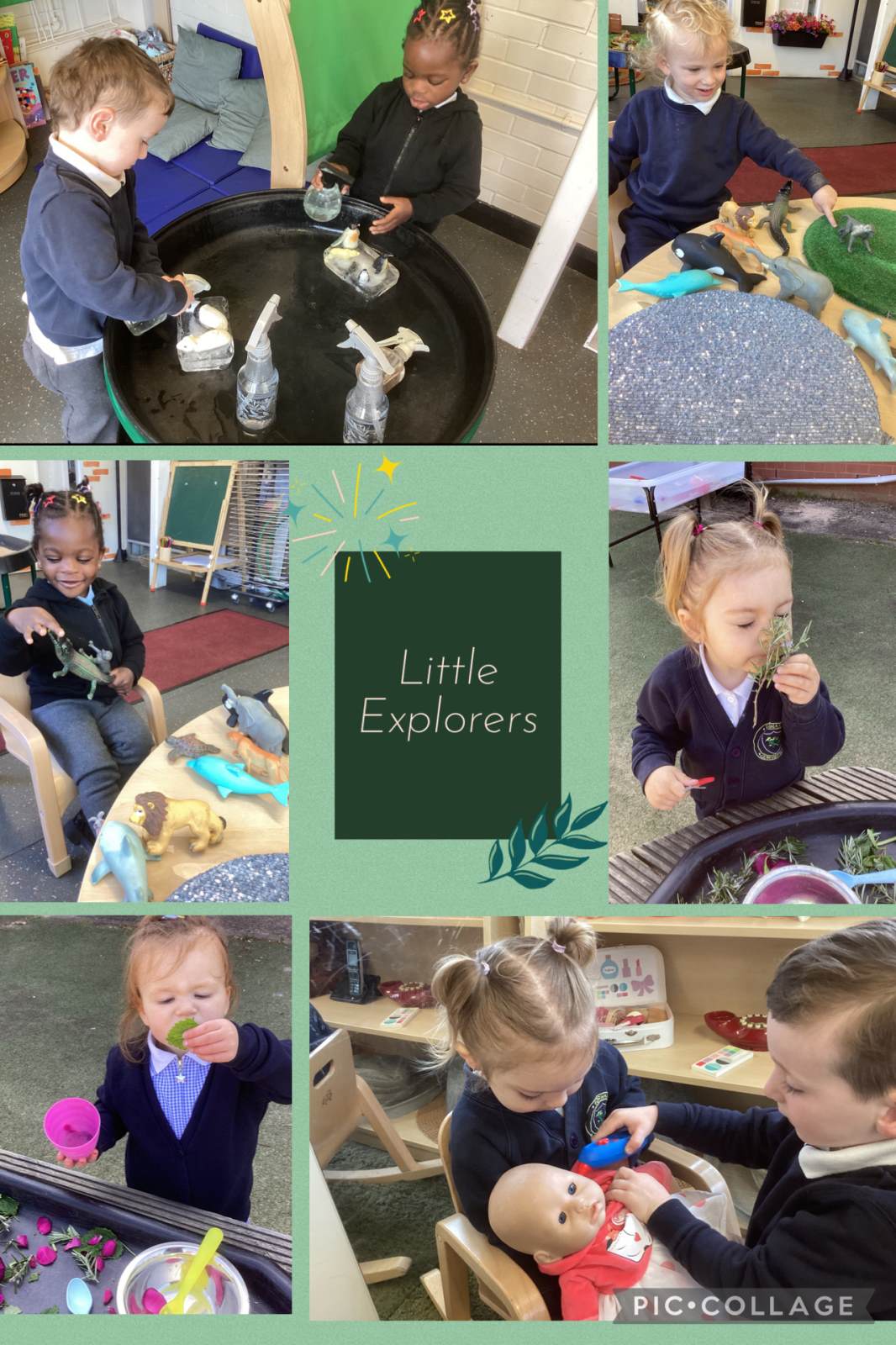
Our nursery scientists are full of curiosity, exploring the world through play, discovery, and investigation!
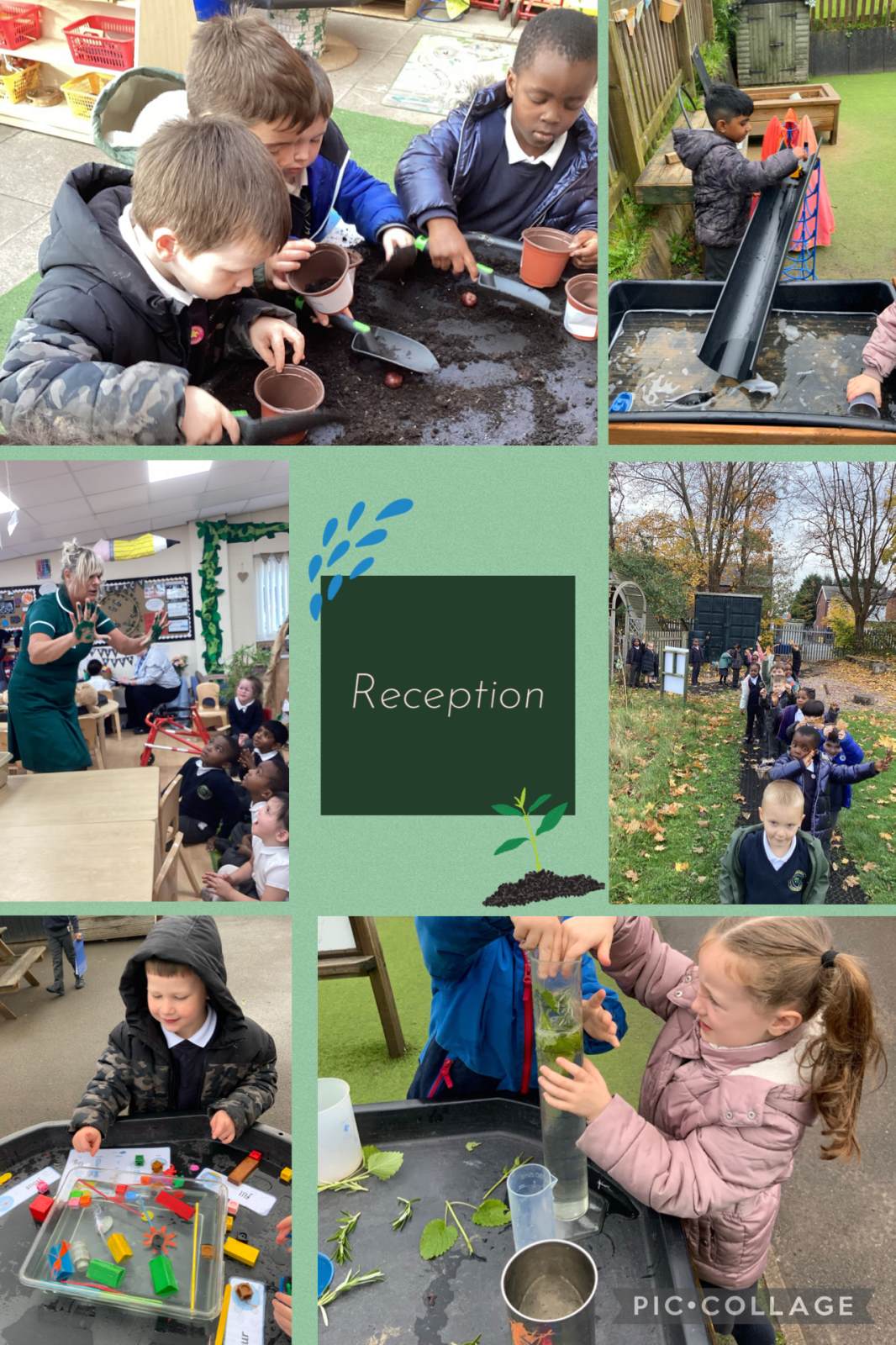
Through discovery and investigation, our Reception children are deepening their knowledge and understanding of the world every day.